



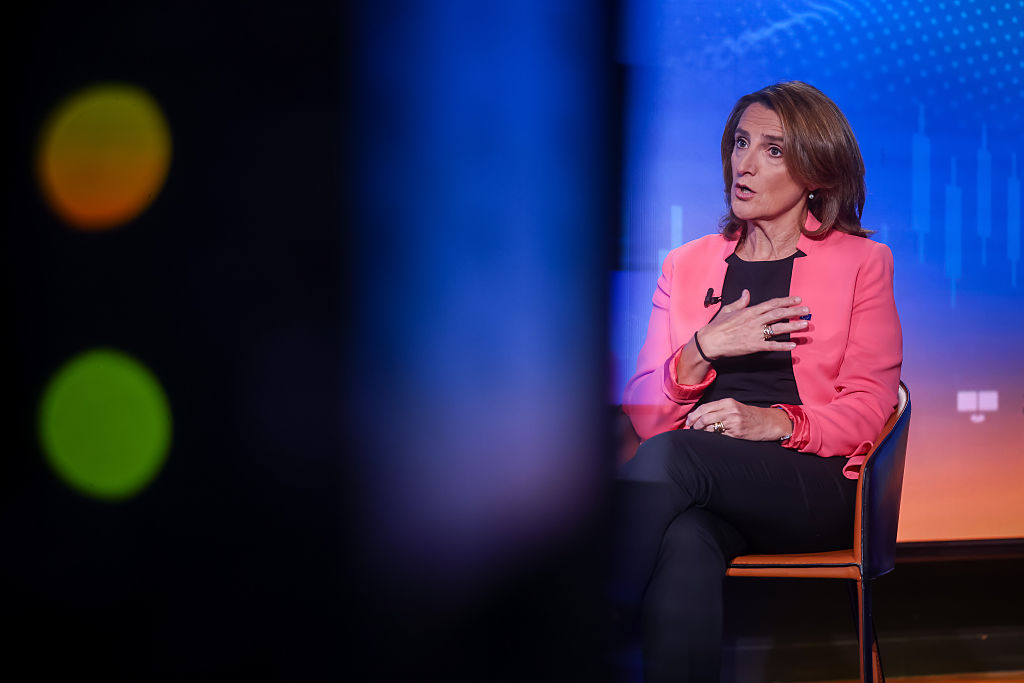
For decades, the European Union has led the world in implementing policies designed to cut emissions, creating the world’s most important price on carbon and crafting the rules of the road for a wide range of regulatory efforts. Now, as the costs of climate change become increasingly difficult to ignore, the bloc is increasingly focusing on adaptation.
In a Sept. 8 interview, Teresa Ribera, who oversees climate policy in the EU as executive vice-president of the European Commission, told me that the growing costs of the effects of climate change mean that policymakers need to consider adaptation as a key focus of economic policy.
“There is no public budget that can support all of this. There is no private insurance that can cope with all these costs,” she said when we met at the EU Delegation office in New York. “We need to invest to reduce these impacts and this cost.”
The EU’s turn to adaptation is an important marker of this climate moment. Most obviously, it signals the harsh reality that global emission reductions efforts have failed to forestall the effects of climate change. It’s also a wake-up call. A focus on adaptation from policymakers in Europe—and eventually elsewhere—should help protect the economy from the growing risks of climate change. But it will also force businesses and governments to confront costs they have largely been able to defer. This is good for long-term economic wellbeing, but it may come as an immediate shock for the unprepared.
At the heart of the EU’s approach is a new adaptation framework due for release later this month. At first glance, it can sound like just another white paper identifying approaches to dealing with climate risk. It calls for a common approach for member states to measure climate risk, principles to ensure that infrastructure is built with future climate conditions in mind, and efforts to identify the most vulnerable places in Europe.
Yet, looking at what EU authorities have released in advance, it is worth underlining that this will not be just a white paper. The package is expected to include proposed legislation that, among other things, could require EU member states to develop climate resilience plans as a prerequisite to funding. And, Ribera says, the framework may eventually serve as the basis for more prescriptive future regulation. “There may be certain regulations that could be increasingly tougher,” she told me.
While the EU’s adaptation work has been long coming, this past summer provided additional public attention and pressure. Record heat swept much of the continent, leading to tens of thousands of excess deaths. Wildfires encroached on major European cities, a once unthinkable threat. Meanwhile, drought conditions made fires harder to fight. It was “quite a shocking experience,” says Ribera.
The aggregate numbers are just as shocking. Between 2021 and 2024, climate-related extreme events led to more than €200 billion in economic losses in the EU, according to figures from the European Environment Agency. Much of those losses were uninsured, leaving the losses to be absorbed by governments, businesses, or households. Without intervention, those numbers will only grow as extreme events worsen. Ribera says the EU is working with insurers to expand coverage where it makes sense while also using public and private financing to cover risks that cannot be covered by insurance alone.
In many circles, the first mention of climate policy in the EU tends to be a discussion about backtracking. It’s a convenient excuse for those who want to train their attention elsewhere. Earlier this year, the EU softened its corporate sustainability disclosure rules and adjusted its carbon pricing framework. This week, the bloc said it was considering delaying implementation of elements of the rules meant to curb methane emissions.
Ribera insists that this misunderstands the European perspective. The long-term goals remain the same. Indeed, earlier this year the EU created a legally binding 2040 emissions reduction target. “There is this strong temptation from some to say, ‘Okay, let’s give up,’ or ‘Let’s lower the bar,’” she told me. But, she argued, Europe instead needs to proceed in a “humble and flexible manner” while “keeping the sense of direction, the commitments, [and] the principles.”
Perhaps more importantly, the bloc is incorporating climate into the core of its economic planning. Decisions about industrial policy, infrastructure, public spending, and competition increasingly have to account not only for emissions but climate risk. Sustainability is moving into “the real heart of the economy,” Ribera told me.
Anyone who trains their eyes too closely on one policy adjustment risks missing the forest for the trees.
